
15 min read
Décideurs du Sport (Patrick Bayeux) has published an interview with Cyril Mourin, looking back on his years as sports adviser to the President of the Republic (2017-2024).
Read the full interview on Décideurs du SportYou served as adviser to the President of the Republic, with responsibility for sport and the Games among other areas, from his election in 2017 until December 2024. Can you explain what this very particular role involves? On sport, for example, which issues was the President briefed on and called upon to decide?
Holding such a role was an immense privilege and an incredible honour. I have always been deeply passionate about both sport and politics, and this position was, for me, a true “dream job“. I never dared imagine I might one day hold it, all the more so during a period when France won and then staged the Olympic and Paralympic Games, the Rugby World Cup and the Ryder Cup. These seven years let me live through unforgettable moments, working as closely as possible with our French athletes and with the leaders of the voluntary and sports sectors, and commit myself to causes and convictions that mattered deeply to me.
It is a role I loved, not least for the variety of its missions, their strategic dimension and the scope to make a concrete difference. I would say that being an adviser to the President means doing several things at once:
- Briefing the Head of State on the issues and the latest developments in the sectors concerned.
- Acting as a source of inspiration and political direction, by putting forward ideas or relaying those of people on the ground, in order to propose structural answers to the problems identified and to set them within an overall vision.
- Assessing the action taken, that is, judging how well the chosen directions have been carried out and checking whether they can meet the targets set.
- Maintaining a constant link between the President and the players in the sectors concerned, whether directly or through communications work and the relationships built with the press.
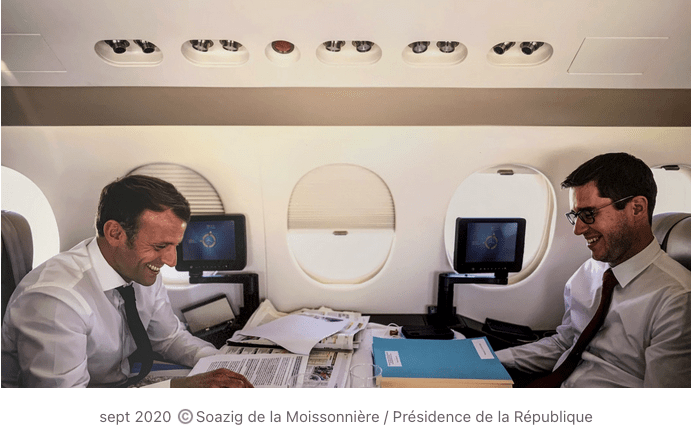
Beyond that, I always took the view that my role should not be limited to advising the President. I also saw myself as a champion of the sectors entrusted to me — with the President, with my colleagues responsible for other areas, and with members of the government.
All of this translates into varied day-to-day work: drafting memos, holding meetings and interviews, travelling, writing speeches, giving interviews and preparing briefings, in close cooperation with Matignon, members of the government and their offices.
I should make clear that this description matches what my role was from May 2017 to September 2024, a period during which the political movement the President comes from held a majority in Parliament and therefore formed the bedrock of the government. Naturally, this role changes when there is a change of government. My position was no longer at all the same under Gil Avérous, which is, in fact, one of the reasons that confirmed my decision to open a new chapter in my professional life after the Paris 2024 Games.
An adviser, however, answers only to the President. They have no decision-making power, unlike a member of the government, or even an adviser at Matignon who, on behalf of the Prime Minister, settles through interministerial meetings the matters that span several ministries or whose importance warrants their being handled by Matignon. That said, the directions given by the Head of State carry real weight within our institutions, which makes this a role of significant responsibility.
Finally, it is a role that depends at once on the profile and temperament of the adviser, on the relationship they have with the President and the ministers, and on the Head of State’s personal engagement with the sectors you are responsible for. Under Emmanuel Macron, I had the good fortune to work alongside a Head of State with a genuine interest in sport. He shared the belief that it is an important matter of public policy. There was no need to convince him, whatever the finance ministries might think, that sport delivers concrete, effective and inexpensive answers to crucial challenges, whether educational, social, public-health or economic. I was also fortunate to enjoy very smooth and warm relations with the various ministers responsible for sport and/or community life.
It is telling, then, that many major measures and plans were announced directly by the President over these seven years: the Pass’Sport scheme, the “5,000 pitches” plans, the roll-out of 30 minutes of daily physical activity in schools, the 2024 National Grand Cause, the “1,000 coaches” plan, and so on. I saw it as the heart of my mission to help carry forward these presidential initiatives.
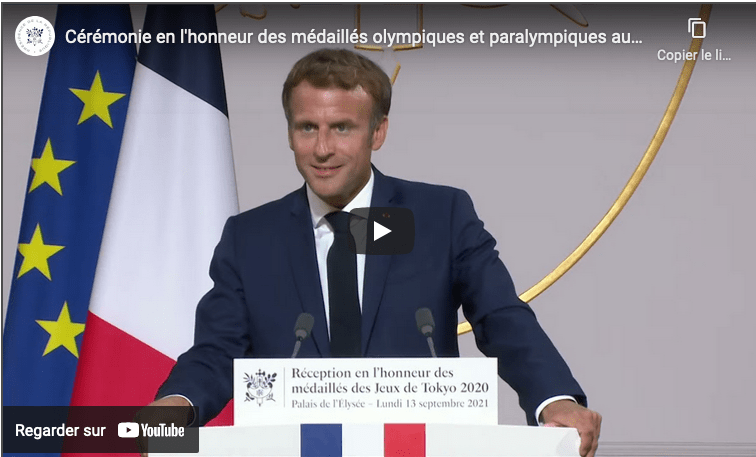
As for the specific matters the President was called upon to decide, those fall under the confidentiality of exchanges between him, the Prime Ministers and the ministers. In any case, he always took care to safeguard the latter’s freedom to act and decide, in keeping with the responsibility that rests with them. What I can say is that he always urged these ministers to adopt a method combining high ambition with precise, measurable objectives and very rigorous monitoring. A top-5 finish among nations at the Olympics, a top-8 at the Paralympics and an increase of three million participants thus shaped those years of sports policy.
You lived through the whole period of preparing for the Olympic and Paralympic Games, the period of studying and setting up the ANS, and of course the Games themselves. What is your assessment?
I am, by nature, subjective, of course, but I try to stay clear-eyed.
I believe our record is a positive one, because we launched genuine reforms in a sector that has not always been a public-policy priority. We met, and even exceeded, the targets we set, which I have just recalled. The fact that the various political movements have chosen to include in their programmes measures designed to extend our work is, to my mind, a form of recognition.
The medal results at the Games, like the rise in the number of participants well before the event and reinforced by it, are the fruit of bold choices, whether reforms or budgetary efforts (with the budget rising by more than 70%, excluding the Games, between 2017 and 2024). Those who think it was a foregone conclusion that everything would go well for French sport at the Games and in their legacy are mistaken. The Games, and their impact on society, would not have been the same with different political and sports leaders, both nationally and locally. Politics rests on choices made day after day.
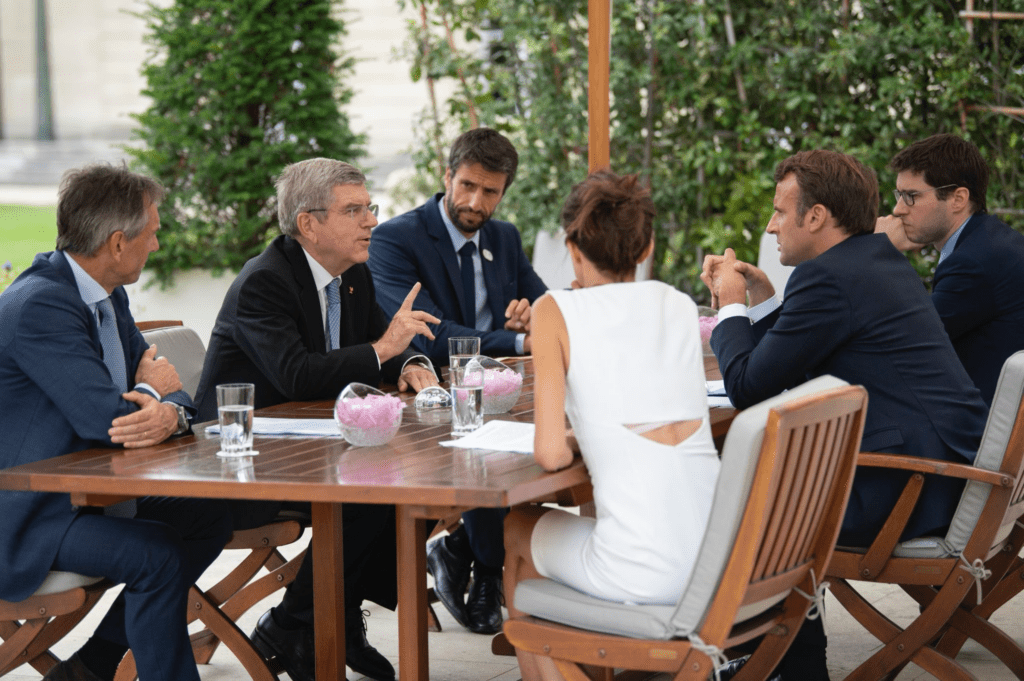
A minister such as Amélie Oudéa-Castéra can legitimately point, in the assessment document she produced, to the major advances she made in order to achieve the expected results, from the presidential commitments through to the Games.
We can still see it today in the legitimate anger of stakeholders over the draft 2025 budget: we live in a democracy where every decision, budgetary effort or reform can of course be called into question by other governments and by Parliament. That fragility is inherent to public action, and it is a good thing. But I reject the idea that the efforts made before and during the Games were designed to be temporary, or as a mere flash in the pan.
“The budget cuts set in motion in the 2025 Finance Bill are, to my mind, disproportionate and deeply unfair.”
Those who initiated these efforts conceived of them as systemic and meant to be sustained. The renewal — indeed the strengthening — of the second “5,000 pitches” plan, announced in 2023 by the President for the 2025-2027 period, bears this out. The budget cuts set in motion in the 2025 Finance Bill are, to my mind, disproportionate and deeply unfair. They also fail on the very efficiency they are meant to serve — the efficiency Bercy dresses them up in — but I will not dwell on that here.
On this assessment, moreover, I am well aware that not all the measures launched have yet reached their full potential, and several projects remain unfinished. That, too, is the nature of public action: the policies pursued must constantly be re-examined to better meet the needs of our fellow citizens. There is therefore still a great deal to do, particularly within our education and health systems, to strengthen the place of physical and sporting activity.
The cultural battle we are waging through the goal of a “Sporting Nation” is our Sisyphean boulder. We must keep pushing it forward relentlessly, with pragmatism and clear-headedness. Denying the legacy and impact of the Games as we envisioned them is pointless. Crediting those Games, on the other hand, with a disproportionate power to solve all of society’s ills is reckless — a claim made more often in the media by certain commentators than in the speeches of political and sports leaders.
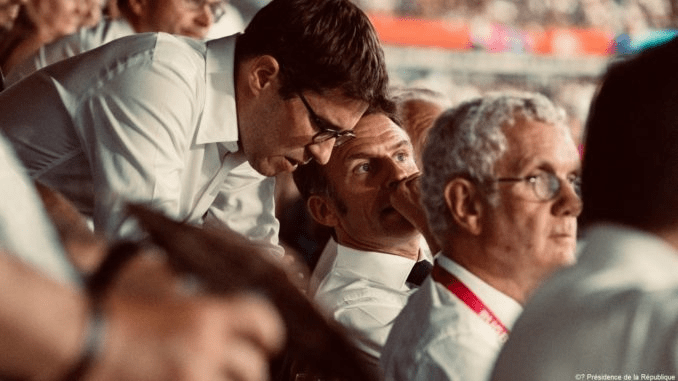
Finally, to believe that most of the challenges facing French sport could be solved by national policies alone, or by the State alone, is an error of judgement. This view, sadly widespread, lets some avoid questioning their own strategies and actions. In my role, fully in line with the President’s directions — and his speeches on territorial differentiation in particular — I always saw sports public policy as a matter of rebuilding trust and handing back freedom of action to those on the ground: clubs, associations and their federations, elite athletes, local authorities and participants. The State’s role, beyond its sovereign duties of oversight and security, must be to inspire, to set things in motion and to provide support, working hand in hand with these players.
It was in this spirit that the ANS was created: to trust the players and their ability to work together, so that our collective action is more efficient, more relevant and more useful, with the same eye for detail as our elite athletes.
The ANS’s record on elite sport is very positive. There is no need for me to go into detail. Its record on grassroots development still needs work, because that is a field where competences and cultures are harder to bring together. We need to keep simplifying and move away from a “service-counter” mindset, so that the ANS becomes a genuine centre of expertise and advice serving federations and local authorities — especially the smallest — on sports strategy. Please, though, do not talk to me about duplication and waste just because it happens to be fashionable. The ANS was a transfer of responsibilities, along with the associated staff, from the State (the Sports Directorate) at national and local level to an operator. I dispute the claim that the work now being done costs more than before; it is precisely the opposite.
What we must above all preserve from the Games is the ambition that drove us all for French sport. An ambition that I know is still fully championed by the President, by many federations, clubs, local elected officials and, of course, by our elite athletes.
On the ground, sports governance is judged a failure, in the sense that the promise was to “do better together, with players who evolve, in an enabling environment”. Do you think this governance should be kept at all costs? What, in your view, needs to change?
It is a vast subject, and I want to say from the outset that we should keep the influence of governance in perspective: questions of organisation often depend less on statutes and legal texts than on the working culture and the players’ willingness to cooperate. In the end, it all comes down to the initial affectio societatis. This point was fairly well clarified in the summer of 2022 by the minister, in a short address.
To assess governance, you have to compare. Before the ANS was created, sports governance was, according to feedback from the field, far more unsatisfactory than it is today. At national level, it was seen as too top-down and vertical, particularly with the CNDS, where the State could go through the motions of consultation and, in some respects, claim a monopoly on knowledge and know-how that was barely credible. At local level, the sheer range of players wanting to get involved in sport bred great complexity and a thin spreading of public funds.
To judge the ANS, you have to go back to the intention of its founders: to improve the effectiveness of governance in order to develop the performance of French sport, whether in titles and medals or in social, public-health and educational impact — the two being, moreover, linked. Collegiality is only a means, deemed necessary by all, to reach this goal; it is not an end in itself. If you approach this subject with the sole ambition of creating a space for sharing, you are heading down the wrong path. As the President often reminds us: “We must guard against solutions in search of a problem.”
At national level, as I have already said, undeniable progress has been made, and not only in elite sport. Reversing the transfer to the federations of the funding the State used to pay directly to local clubs, for instance, would be folly.
“At territorial level, it was never the intention that the ANS’s regional governance alone would resolve all the friction and loss of efficiency between local authorities, between public and private players, or between the local arm of the State and local authorities.“
Wherever responsibilities and funding streams are tangled together, local discussions are necessary. These exchanges depend more on the willingness of the parties involved than on any text governing their relations. The ANS cannot be held responsible for the lack of clarity over who takes the lead on local sports policy.
That said, what has been set in motion in terms of governance has, in many regions, departments and towns, helped sustain a momentum of collective work. These collaborations have often been built on shared findings, grounded in precise, qualified data that informs local public decision-makers. That said, I share the criticisms levelled at the ANS’s territorial roll-out. In my view, we should have started from local sports projects — whose relevant scale is the inter-municipal level — and worked back from there to identify the right spaces for coordination at the level above. The ANS’s strategy and tools could then have delivered real added value.
Some initiatives, unfortunately, seemed to drift informally towards the idea of creating a kind of regional ANS, endowed with responsibilities and resources (often the State’s). At that point we reached the “laissez-passer A38” of Asterix’s Twelve Tasks… These initiatives, however well-intentioned, made the role of the prefects less legible and complicated the coordination of the local funding envelopes meant to support sports investment.
These drifts will need to be corrected, because they do not reflect the original spirit of the reform. That is the legitimate aim of the current minister, as it was of her predecessor. The law, indeed, should be far less prescriptive on these matters (the organisation of territorial governance), leaving the players more freedom to organise themselves according to local specificities.
This will also take the courage to finally clarify how responsibilities are shared between tiers — a task we were unable to complete with Parliament, which I regret.
Moreover, it is essential to repeat that the ANS is not meant to be merely a forum for consultation or a counter for handing out grants. It must become a body for foresight, support and shared initiatives. Personally, I would have liked the ANS, in the areas that ask for it, to play a role somewhat similar to that of SOLIDEO for the Games. It could thus have overseen and coordinated the design and roll-out of local strategies and sports facility projects, taking qualitative approaches to sustainability, impact and innovation.
If you had three important issues you would like to see championed over the coming years, which would they be?
Beyond what we have already discussed, the first that comes to mind is the question of children’s time and out-of-school hours. The heart of my commitment has always been the fight against social determinism, and it is at the root that we must act. I do not want to dwell on it here, but the question of what a child does outside school hours strikes me as crucial.
In lower secondary school, our system rests on a weekly volume of compulsory hours that is already substantial. Everything else depends on the goodwill of local associations and their volunteers, on the means and interest of families, on the commitment of certain people within the state education system, or on the capacity of local authorities to support a range of activities. Every day, hundreds of thousands of pupils aged 10 to 16 finish their school day, sometimes very early depending on their timetable. My own 10-year-old son, for example, would often find himself home alone from 2 p.m.
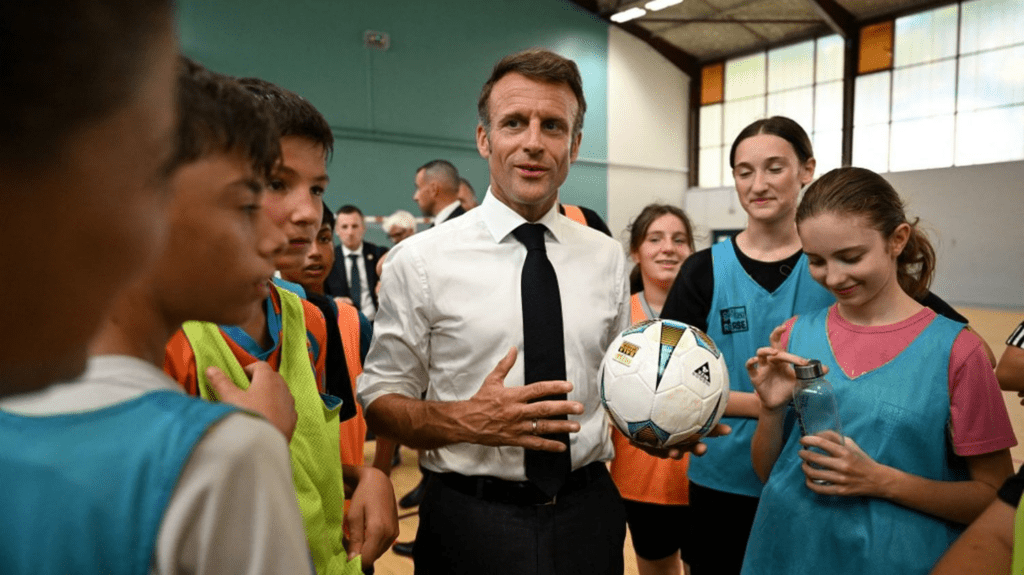
The Republic cannot leave families — especially those in greatest difficulty — to face this problem alone. All the more so since hundreds of thousands of sports and cultural associations are eager to offer activities to these young people, rather than see them spend hours on their phones.
That is why I firmly believe in the “8 a.m. to 6 p.m.” scheme launched by the President in the REP and REP+ priority education zones, beyond even the two extra hours of sport in lower secondary school that form part of it. This change of approach, called for by the voluntary and sports movement, makes it possible to better connect these players with the school. It is workable, and affordable, without necessarily adding to the burden on local authorities. Indeed, many local authorities already do extraordinary work in weaving fine-grained provision as close as possible to needs.
Such a national scheme would unlock considerable potential for activities for our sports associations and would help professionalise their staff by giving them access to full-time jobs. It would mean, in a sense, making universal the use of popular education to fill out young people’s days with hours of culture, sport, academic support, mentoring and opening up to the world. It would remain optional for the pupil, but a new obligation would rest on public bodies: to offer this provision to every secondary-school pupil, everywhere in France, for a fixed number of hours yet to be defined. In short, it is time to build a genuine public service of popular education.
And no, once again, it is not unaffordable. It is simply a matter of steering part of our current support towards these goals, while ensuring that the state education system and local authorities provide free access to school premises.
This would, moreover, be a powerful measure for the appeal of state schools, since this kind of supervision on school premises for hours beyond the compulsory school day is the norm in state-subsidised private schools.
My second issue is training and employment in sport, and in particular the question of “paid volunteering” for some instructors.
This often-underestimated issue concerns tens of thousands of young people (and not-so-young people) who supervise activities for payment, but without a contract, a status or a professional licence. These practices rely in particular on the system of membership-fee waivers or “match bonuses” (…).
There is a considerable pool of jobs here to bring these instructors into genuine professional careers. I campaign for the creation of a “sports CESU”, which would be to the sporting world what the CESU has been to domestic employment: a sweeping simplification reform, making it cheaper and easier to put an instructor on the payroll, with all the rights and benefits that entails for employee and employer alike. Such a scheme, properly regulated of course, would be a major step in supporting the voluntary sector, in particular those working on social inclusion through sport.
The President had, in fact, requested — at the launch of the “1,000 inclusion coaches” plan in disadvantaged neighbourhoods — a joint mission between the Ministry of Sports and the Ministry of Labour on this matter. I know this issue aroused great interest, including within the administrations concerned, and I am eagerly awaiting the next steps that will follow.
Finally, while I could have spoken about the future of the Pass’Sport scheme, or the reforms to be undertaken on digital, data and AI, my third point will focus on inclusion.
Much is expected of us. Although progress has been made, notably with inclusive education, the training of clubs and the accessibility of facilities, a great deal remains to be done. The appointment of Marie-Amélie Le Fur to head the ANS shows the place these issues, which she has championed so well, now hold.
The Paralympic Games reminded us powerfully that our fellow citizens with disabilities must not simply be seen, but truly looked at; not merely heard, but listened to; not only taken into account, but genuinely respected and valued. Sport is a wonderful tool for bringing them a little joy, improving their health and well-being, and breaking their isolation. And it is one of the sectors where so much discrimination against them still persists.
I think here of the commitment made in 2024 on reimbursing sports wheelchairs and prosthetics, a promise that urgently needs to be honoured, even under a different parliamentary majority.
I think too of the “para-friendly clubs” scheme, which is proving a great success and deserves to be expanded.
Finally, I want to pay tribute to those behind the future ISPC centre in the Yvelines, which will be a tangible legacy of the Games. This institute, backed by the ministries of health and sports as well as by local authorities, will be the first in the world entirely dedicated to research and care in the field of para-sport and health. Here too, I cannot wait to see this large-scale project take shape; its impact on our entire care system for people with disabilities will, I am certain, be very significant.
Interview conducted by Décideurs du Sport — Patrick Bayeux.
Read the full interview on Décideurs du SportSideline Conseil
Échangeons sur votre situation
Une échéance réglementaire, un dossier sensible, une stratégie d’influence à construire ? Exposez-nous votre enjeu — nous vous dirons comment nous pouvons vous être utiles.
ou directement à contact@sideline-conseil.fr