
4 min read
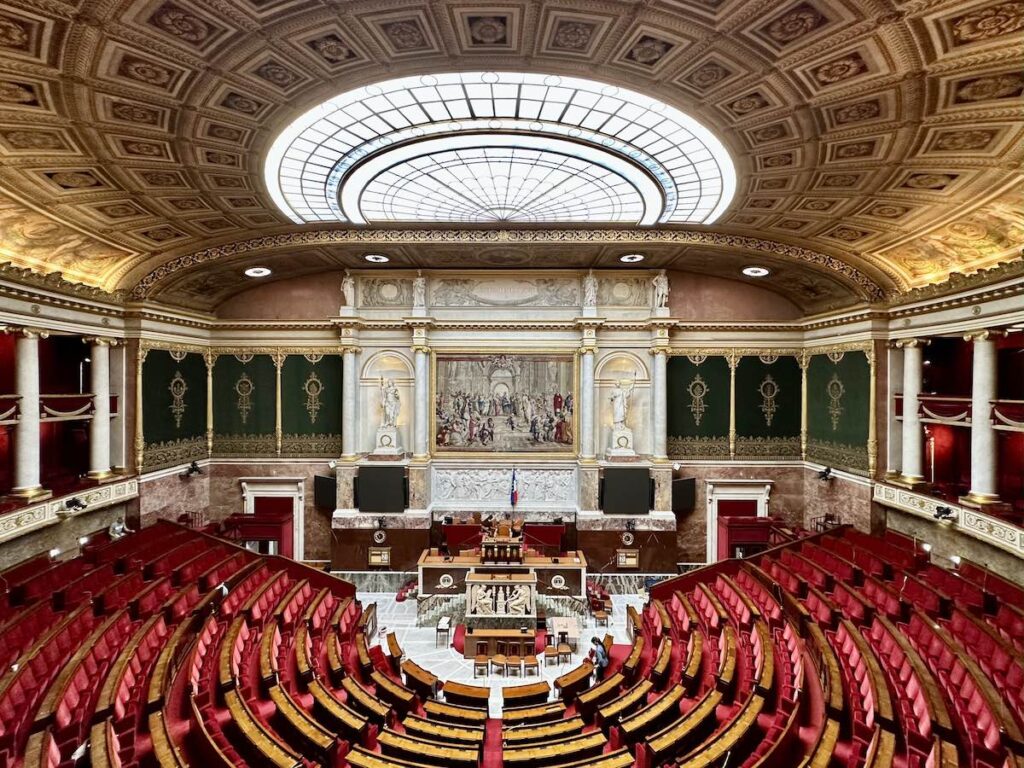
On 8 July, the joint Senate-Assembly committee (commission mixte paritaire, CMP) on the bill on the organisation, governance and financing of professional sport reached a unanimous agreement. On 20 and 21 July, the National Assembly and then the Senate will vote on its conclusions. Make no mistake: that vote will be a formality. Article 45 of the Constitution now locks the text: no amendment is admissible without the Government’s agreement, and the CMP compromise forms an indivisible whole. What was settled on Wednesday evening will be the law.
I wrote, as the Assembly examination began, that everything had to change so that the game could endure. Here we are, and it is worth welcoming — even if one may regret the relationship to sport that still seeps through certain passages of the text: a form of distrust towards actors treated as subjects of administration rather than partners, two years after the sports movement demonstrated, in Paris, what it is capable of when trusted. I will come back to that. But the essentials first: the text produced by the CMP is much better than the one voted in public sitting on 30 June. Better because more coherent, more legally solid, rid of provisions that had more to do with political signalling than with regulation.
Multi-club ownership: control rather than incantation. The outright ban voted by MPs was set aside, and rightly so. Not because multi-club ownership raises no questions — it raises serious ones — but because a unilateral national prohibition was both unenforceable and counter-productive: the subject must be handled at European level, where the competitions are played and where the groups concerned operate. The final text prefers strengthened control, entrusted to the DNCG, armed with a sanctioning power where a structure does not offer sufficient guarantees. It is less spectacular. It is also more effective.
Sports betting: incoherence avoided by a whisker. The provision banning betting advertising around fixtures was deleted. One must measure what French sport has just escaped. Adopted as it stood, it would have cut into the advertising revenue of the audiovisual media and radio stations that finance sports broadcasting, and called into question a great many sponsorship and naming contracts — that is, direct resources of clubs, leagues and federations. Sport’s economy would have been weakened in the name of its protection. The CMP preferred coherence: the protection of the youngest bettors notably remains.
Free-to-air broadcasting: the law had nothing to add to the decree. The obligation to broadcast free of charge the European and world finals involving French clubs was also deleted. Here again, common sense prevailed: the decree on events of major importance already organises broad public access to the great fixtures, and France cannot dispose by statute of rights that belong to UEFA or FIFA. Legislating over what one does not own has never protected anyone. Above all, it is mistaken to think one is serving the sports movement by depriving all pay-TV players of the hope of audiences boosted by a French club’s run (outside the events covered by the aforementioned decree).
On the core of the reactor, finally, the text delivers. The drafting of the sub-delegation withdrawal was clarified: it will sanction a failure jeopardising the performance of the public service mission, at the end of an adversarial procedure — a genuine power to take back control, not an arbitrary sword of Damocles. The sharing of broadcasting rights within a championship will remain contained within a ratio of one to three, a condition (though naturally not the only one) for regaining competitiveness in our competitions. The packaging of rights gains coherence (by allowing a single package), the club-owned company offers professional football the instrument for refounding its commercial governance, and ARCOM will be able to block pirate streams in real time during matches. Add the extended integrity check, the framing of agents and new tools for women’s professional sport: the overall architecture is there.
There remains the pay cap — and that is where the shoe pinches. Not so much in its level (aligned with that of public company executives) as in what it reveals — as the president of the French Golf Federation denounces in his op-ed on what he perceives as the Government’s « contempt ». Federations, leagues and their commercial companies are private-law actors, living essentially on private revenue. Applying to them a salary regime designed for the public sphere is to mistake what they are. And the derogation mechanism speaks volumes: above the cap, authorisation from the minister for sport will be required. French sport’s most strategic hires — national team managers, top executives — will thus depend on a government green light, with all that implies in delays, hazards and, tomorrow perhaps, negotiations that will not dare speak their name. That is the relationship to sport I mentioned at the outset: a public authority which, at the very moment it equips the sector with tools of emancipation, cannot resist the temptation to keep a hand on its most intimate choices. That reflex will have to be questioned.
That regret stated, let us keep the measure of what has just happened: this law changes the playing field. It makes it more stable, more legible, more favourable than it has been for a long time. But a field, however well drawn, has never won a match. What will count from now on is the mindset of those who will play on it: the capacity of federations, leagues and clubs to overcome the fault lines that weakened them, to come back together around a shared project — sporting, economic, collective. Whatever the framework, even the most accomplished, the central point remains the women and men who act.
Sideline Conseil
Échangeons sur votre situation
Une échéance réglementaire, un dossier sensible, une stratégie d’influence à construire ? Exposez-nous votre enjeu — nous vous dirons comment nous pouvons vous être utiles.
ou directement à contact@sideline-conseil.fr